Brain and Mitochondrial Research
Improving diagnosis and outcomes for children and families with rare inherited mitochondrial and neurogenetic disorders.
Our research goal
We aim to improve diagnosis and outcomes for children and families affected by rare inherited disorders, particularly those affecting mitochondria (our cellular power plants), and other critical cellular processes impacting the healthy development of brain and nerves.
Our research focus
We have been the major national centre for laboratory investigation of mitochondrial disease for over 30 years and have longstanding research interests in other inherited metabolic disorders and neurogenetic conditions.
Genomics and functional genomics for diagnosis
DNA sequencing technologies have transformed the diagnosis of rare diseases. However, around half of all patients suspected of having mitochondrial or other rare inherited conditions remain undiagnosed after genomic investigations.
To address this, we use multi-omic approaches, including:
- Transcriptomics
- Proteomics
- Targeted functional analyses
These methods help us solve complex diagnostic cases that standard genomic sequencing cannot.
Preclinical stem cell models
To model mitochondrial diseases and other neurogenetic conditions in vitro (in a dish), we use pluripotent stem cell technology. This allows us to reprogram patient skin cells into specific cell types such as:
- Cardiomyocytes (heart cells)
- Neurons
These patient-specific models enable us to study disease mechanisms and test treatment strategies in the most relevant cell types.
Implementation of research into the Australian health care system
Translating research into clinical practice can take years. We focus on developing an evidence base to facilitate this, playing lead roles in local, national and international consortia, such as:
- International Precision Child Health Partnership (IPCHiP)
- Leigh Syndrome Roadmap Project
- mitoHOPE Program
- Mitochondrial Diagnostic Network for Genomics and Omics (mitoMDT)
- The Undiagnosed Diseases Network of Australia (UDN-AUS)
Our work focuses on:
- Expanding access to genomic diagnostic services
- Supporting publicly accessible reproductive options to prevent inherited disease
- Developing health economic evidence for new services
- Facilitating recruitment of patients into clinical trials
We also work closely with consumer organisations such as the Mito Foundation, KAND and the Childhood Dementia Initiative to enhance the diagnosis and management of children and families living with these disorders.
Watch for more information
mitoHOPE program
The mitoHOPE Program is piloting the introduction of mitochondrial donation into Australian clinical practice. Mitochondrial donation is an experimental assisted reproductive technology that has the potential to reduce the chance of a child developing some forms of serious mitochondrial disease (mito).
David Thorburn interview by Indira Naidoo on ABC Nightlife
Professor David Thorburn discusses the diagnosis of mitochondrial disease and proposed laws around mitochondrial donation. Interview by Indira Naidoo, ABC Nightlife.
Lewis' legacy
Liz and Luke share their deeply personal story of their little boy Lewis, who sadly died of mitochondrial heart disease eight days after being born. Lewis' legacy however means MCRI researchers like Alison Compton and Ann Frazier can tell affected families that this awful outcome is extremely unlikely to happen again.
NAD(P)HX dehydratase (NAXD) deficiency
An international team of researchers, led by MCRI, have identified a rare genetic brain disorder that causes severe neurological damage in children after a mild episode of fever or illness.
More information
Contact us
Professor John Christodoulou
Theme Director/Chair in Genomic Medicine
Phone:
show phone number
Email
show email address
Theme Director

Group Leaders

Team Leaders



Group Members






Our projects

International Precision Child Health Partnership (IPCHiP)
Improves child health and rare disease outcomes through collaborative genomics.
The International Precision Child Health Partnership (IPCHiP), is the first major global collaboration around genomics and child health. As an international consortium IPCHiP leverages the medical and scientific expertise from MCRI, SickKids, Boston Children's Hospital, GOS ICH and GOSH aims to use genomic data to accelerate discovery and therapeutic options.
Read more...
KIF1A-Associated Neurological Disorder (KAND) research program
KIF1A-Associated Neurological Disorder or KAND is a severe and ultra-rare neurodegenerative disorder caused by one or more variants in the KIF1A gene. Symptoms of KIF1A-Associated Neurological Disorder can present at birth or in early childhood and can affect the eyes, muscles and nerves. KIF1A-Associated Neurological Disorder can also result in significant intellectual disability, development delay, wheelchair dependence at early age, blindness and drug-resistant seizures. As it is a progressive condition, KIF1A-Associated Neurological Disorder symptoms will worsen as a child gets older.
Read more...
Leigh Syndrome Roadmap Project (LSRP)
We invite individuals between the ages of 0 and 75 with a genetic diagnosis of Leigh Syndrome to participate in our study. Researchers will collect both objective and subjective assessments of symptom involvement.
Read more...
Precision therapies for life-threatening ultra-rare genetic diseases in children
Developing personalised medicines using genomics, stem cells and drug screening to restore brain function in children with specific ultra-rare, life-threatening genetic disorders.
Read more...mitoHOPE program
The mitoHOPE Program is piloting the introduction of mitochondrial donation into Australian clinical practice. Mitochondrial donation is an experimental assisted reproductive technology that has the potential to reduce the chance of a child developing some forms of serious mitochondrial disease (mito).
More about mitoHOPE, Monash University
Using multi-omic technologies to boost diagnosis of rare diseases
Individual rare diseases affect fewer than 1 in 2,000 people, but collectively, more than 7,000 rare diseases impact over one million Australians. While genomic sequencing has transformed rare disease diagnosis, many cases remain unsolved.
We use advanced wet and dry lab technologies to investigate ‘variants of uncertain significance’ in known or candidate disease genes identified through genome sequencing, alongside Proteomics (in collaboration with the RDMassSpec project) and Transcriptomics.
Our goal is to deliver definitive diagnoses for previously unsolvable cases, improve understanding of disease mechanisms, and develop methods that can be applied to other rare diseases.
More about RDMassSpec, Australian Genomics
Using human stem cell models to understand disease mechanisms
Understanding disease pathomechanisms (describing the "how" behind a pathological condition) is often limited by the inaccessibility of affected tissues such as the heart and brain.
To overcome this, we use pluripotent stem cell models, reprogramming patient skin cells into cardiomyocytes (heart cells) and neurons. This will allow us to investigate the tissue-specific disease mechanisms behind several neurological and mitochondrial conditions.
These patient-specific models allow us to study disease mechanisms in the most relevant cell types. We apply cutting-edge techniques to analyse mitochondrial and cellular pathways using functional assays, transcriptomics, and quantitative proteomics.
Undiagnosed Diseases Network-Australia (UDN-Aus)
Genomic sequencing has significantly shortened the diagnostic journey for individuals with rare genetic disorders, with clinical diagnostic rates reaching up to 50 percent. However, this still leaves half of all patients without a diagnosis.
To address this, we have established the Undiagnosed Diseases Network–Australia (UDN-Aus), a national, multidisciplinary collaboration.
UDN-Aus brings together clinical and scientific expertise to deliver consistent, scalable genomic reanalysis and apply advanced genomic and functional testing technologies. Our goal is to increase diagnostic rates to over 70 percent within three years.
Mitochondrial Diagnostic Network for Genomics and Omics (MitoMDT)
We lead the MitoMDT, a $3 million MRFF-funded national network of clinicians, researchers, and diagnostic scientists. This initiative combines genomic testing with multi-omic technologies to improve diagnostic rates for mitochondrial disease to over 70 percent.
The network aims to identify novel genes, mechanisms, and phenotypes, enabling personalised treatments and better health outcomes. Our team includes international experts in genomics, transcriptomics, proteomics, metabolomics, and mitochondrial function analysis.
Investigating the complexities of ATAD3-linked mitochondrial disease
Pathogenic variation in the ATAD3 locus is amongst the most common causes of severe, paediatric, nuclear-genome encoded mitochondrial diseases. Genetically complex, these variants lead to clinically heterogeneous diseases with a range of severities.
We are using cutting edge sequencing approaches and human cell model systems to define the genetic landscape of ATAD3-linked disease, and the mechanisms underpinning them, incorporating omics, biochemical and mitochondrial functional assays.
We have developed a novel cell model system enabling more detailed analysis of the pathology underlaying ATAD3 disorders along with therapeutic drug screening, with the ultimate aim of developing our understanding of ATAD3 disorders and improving patient quality of life.
MCRI News - Major cause of rare genetic mitochondrial disease identified
Funding
Thank you to our supporters.
- Faculty of Medicine, Dentistry and Health Sciences, The University of Melbourne
- Foundation for Children
- KIF1A.org Foundation
- Loulou Foundation (CDKL5 Forum Junior Fellowship)
- Medical Research Futures Fund
- Mito Foundation
- mRNA VIC (Department of Jobs, Skills, Industry and Regions)
- National Health and Medical Research Council
- Royal Children’s Hospital Research Foundation
- RTW Charitable Foundation
- S&R Roth Foundation
- Stafford Fox Medical Research Foundation
- The Orphan Disease Center (Million Dollar Bike Ride Grant Program)
- US Department of Defence Congressionally Directed Medical Research Programs
- VESKI
Collaborations
We partner with leading institutions worldwide, including:
- Bio21 Molecular Science and Biotechnology Institute, The University of Melbourne, Melbourne, Victoria, Australia
- BioFab3D, St Vincent’s Hospital, Melbourne, Victoria, Australia
- Boston Children’s Hospital, Boston, MA, USA
- Broad Institute, Cambridge, MA, USA
- Center for Applied Genomics and Mitochondrial Medicine Frontier Program, Children’s Hospital of Philadelphia, Philadelphia, PA, USA
- Cellular and Molecular Biology Program, University of Michigan Medical School, Ann Arbor, MI, USA
- Department of Genetics, Yale School of Medicine, New Haven, CT, USA
- Department of Paediatrics and Medicine and Division of Molecular Genetics, Columbia University Irving Medical Center, NY, USA
- Department of Pediatrics & Clinical Genomics, Saitama Medical University, Japan
- Department of Precision Medicine, University of Campania “Luigi Vanvitelli”, Naples, Italy
- Department of Translational Medicine, University of Naples "Federico II", Italy
- Drug Discovery Biology, Monash Institute of Pharmaceutical Sciences, Monash University, Melbourne, Victoria, Australia
- Enzymology & Metabolism, Université du Luxembourg, Belvaux, Luxembourg.
- Genetic Metabolic Disorders Research Unit, The Children’s Hospital at Westmead, Sydney, New South Wales, Australia
- Genetic Services of Western Australia, Perth, Western Australia, Australia
- Great Ormond St Hospital, London, United Kingdom
- Hospital for Sick Children, Toronto, Canada
- Intractable Disease Research Center, Juntendo University, Japan
- Kennedy Center, Department of Clinical Genetics, Copenhagen University Hospital, Rigshospitalet, Glostrup, Denmark
- Kids Neuroscience Centre, Kids Research, The Children's Hospital at Westmead, Sydney, New South Wales, Australia
- Kinghorn Centre for Clinical Genomics, Garvan Institute of Medical Research, Sydney, New South Wales, Australia
- Kolling Institute, Sydney, New South Wales, Australia
- Molecular Genetics of Neurodevelopment, Department of Woman and Child Health, University of Padova, Italy
- Molecular Neurobiology Research Laboratory, Kids Research, Children's Hospital at Westmead, Sydney, New South Wales, Australia
- Monash Biomedicine Discovery Institute, Monash University, Melbourne, Victoria, Australia
- New South Wales Health Pathology, Sydney, New South Wales, Australia
- Paediatric Neurology Institute, The Edmond and Lily Safra Paediatric Hospital, Sheba Medical Center, Tel HaShomer, Israel
- Queensland Children's Hospital, Brisbane, Queensland, Australia
- School of Biomedical Sciences, Faculty of Health, Medicine and Behavioural Sciences, The University of Queensland, Brisbane, Queensland, Australia
- Telethon Institute of Genetics and Medicine, Pozzuoli (NA), Italy
- The Kids Research Institute, Perth, Western Australia, Australia
- Victorian Clinical Genetics Services (VCGS), Melbourne, Victoria, Australia
Featured publications
Amarasekera SSC, Hock DH, Lake NJ, Calvo SE, Grønborg SW, Krzesinski EI, Amor DJ, Fahey MC, Simons C, Wibrand F, Mootha VK, Lek M, Lunke S, Stark Z, Østergaard E, Christodoulou J, Thorburn DR, Stroud DA, Compton AG. Multi-omics identifies large mitoribosomal subunit instability caused by pathogenic MRPL39 variants as a cause of pediatric onset mitochondrial disease. Hum Mol Genet. 2023 Jul 20;32(15):2441-2454.
Hock DH, Caruana NJ, Semcesen LN, Lake NJ, Formosa LE, Amarasekera SSC, Stait T, Tregoning S, Frajman LE, Bournazos AM, Robinson DRL, Ball M, Reljic B, Ryder B, Wallis MJ, Vasudevan A, Beck C, Peters H, Lee J, Tan NB, Freckmann ML; MitoMDT Diagnostic Network for Genomics and Omics; Karlaftis V, Attard C, Monagle P, Samarasinghe A, Brown R, Bi W, Lek M, McFarland R, Taylor RW, Ryan MT, Cooper ST, Stark Z, Christodoulou J, Compton AG, Thorburn DR, Stroud DA. Untargeted proteomics enables ultra-rapid variant prioritisation in mitochondrial and other rare diseases. Genome Med. 2025 May 22;17(1):58.
Kaur S, Van Bergen NJ, Verhey KJ, Nowell CJ, Budaitis B, Yue Y, et al. Expansion of the phenotypic spectrum of de novo missense variants in kinesin family member 1A (KIF1A). Hum Mutat. 2020 Oct;41(10):1761–1774.
Rius R, Compton AG, Baker NL, Balasubramaniam S, Best S, Bhattacharya K, Boggs K, Boughtwood T, Braithwaite J, Bratkovic D, Bray A, Brion MJ, Burke J, Casauria S, Chong B, Coman D, Cowie S, Cowley M, de Silva MG, Delatycki MB, Edwards S, Ellaway C, Fahey MC, Finlay K, Fletcher J, Frajman LE, Frazier AE, Gayevskiy V, Ghaoui R, Goel H, Goranitis I, Haas M, Hock DH, Howting D, Jackson MR, Kava MP, Kemp M, King-Smith S, Lake NJ, Lamont PJ, Lee J, Long JC, MacShane M, Madelli EO, Martin EM, Marum JE, Mattiske T, McGill J, Metke A, Murray S, Panetta J, Phillips LK, Quinn MCJ, Ryan MT, Schenscher S, Simons C, Smith N, Stroud DA, Tchan MC, Tom M, Wallis M, Ware TL, Welch AE, Wools C, Wu Y, Christodoulou J, Thorburn DR. The Australian Genomics Mitochondrial Flagship: A national program delivering mitochondrial diagnoses. Genet Med. 2025 Jan;27(1):101271.
Van Bergen NJ, Guo Y, Al-Deri N, Lipatova Z, Stanga D, Zhao S, Murtazina R, Gyurkovska V, Pehlivan D, Mitani T, Gezdirici A, Antony J, Collins F, Willis MJH, Coban Akdemir ZH, Liu P, Punetha J, Hunter JV, Jhangiani SN, Fatih JM, Rosenfeld JA, Posey JE, Gibbs RA, Karaca E, Massey S, Ranasinghe TG, Sleiman P, Troedson C, Lupski JR, Sacher M, Segev N, Hakonarson H, Christodoulou J. Deficiencies in vesicular transport mediated by TRAPPC4 are associated with severe syndromic intellectual disability. Brain. 2020 Jan 1;143(1):112-130. Erratum in: Brain. 2020 Mar 1;143(3):e24.
Van Bergen NJ, Guo Y, Rankin J, Paczia N, Becker-Kettern J, Kremer LS, Pyle A, Conrotte JF, Ellaway C, Procopis P, Prelog K, Homfray T, Baptista J, Baple E, Wakeling M, Massey S, Kay DP, Shukla A, Girisha KM, Lewis LES, Santra S, Power R, Daubeney P, Montoya J, Ruiz-Pesini E, Kovacs-Nagy R, Pritsch M, Ahting U, Thorburn DR, Prokisch H, Taylor RW, Christodoulou J, Linster CL, Ellard S, Hakonarson H.NAD(P)HX dehydratase (NAXD) deficiency: a novel neurodegenerative disorder exacerbated by febrile illnesses. Brain. 2019 Jan 1;142(1):50-58.
Latest news

Automated reanalysis in rare disease
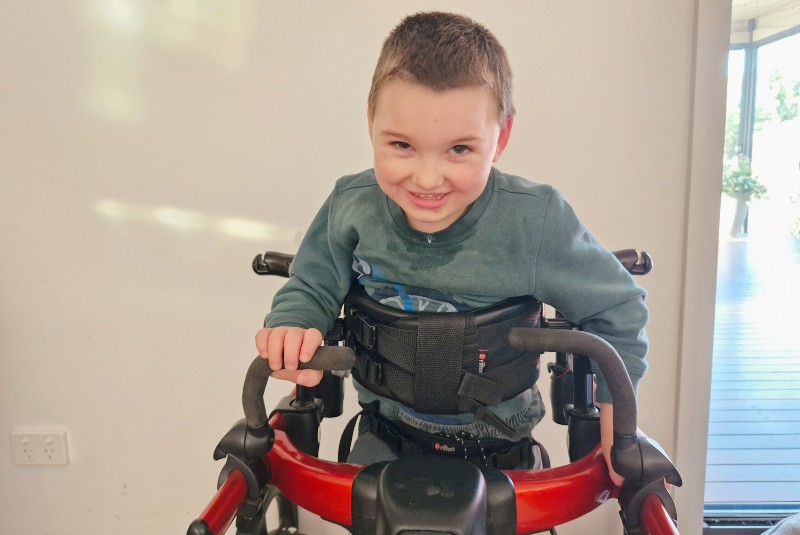
Life with an ultra-rare condition
Associate Professor Katie Ayers awarded Rebecca Cooper Fellowship

NHMRC Ideas Grants to advance childhood treatments and diagnoses
Newborn genomic screening enables more lifesaving diagnoses

Genomic test unlocks brighter future

Rare Diseases Now (RDNow)
Precision therapies for life-threatening ultra-rare genetic diseases in children

Cybec Foundation funding for Associate Professor Katie Ayers

Searching for a rare disease diagnosis
Top genetics awards for Professor Daniel MacArthur and Dr Sylvia Metcalfe